October 09, 2026


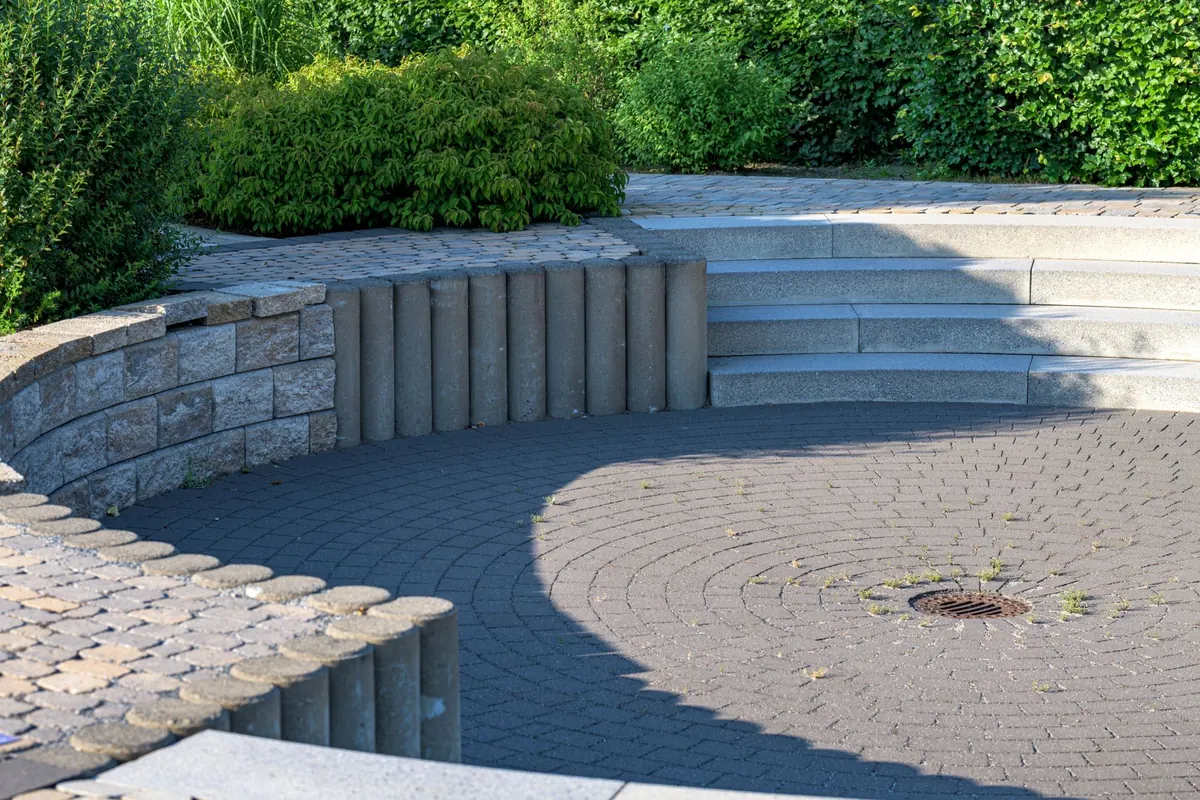
Ask anyone who has laid a patio in Britain and they will tell you the hard part isn't picking a colour — it's picking something that still performs after three wet winters. Porcelain and natural stone are the two front-runners for most garden projects, and both can be excellent. What separates them is how they behave when the surface is wet, how they handle a hard frost, how much upkeep they ask for, and what the whole job costs once the sub-base is included.
Most patio regrets begin here. Slip resistance is not a straight stone-versus-porcelain contest; it comes down almost entirely to surface finish. A riven sandstone flag is naturally textured. A honed limestone or a polished porcelain tile is smooth, and once a film of algae or a thin layer of rainwater sits on it, it can become genuinely treacherous.
So ignore the polished samples that look so good in a showroom. For any area that will be walked on in wet weather — especially steps, ramps and the path to the back door — choose a textured or grip-finish surface in either material. Ask the supplier for the wet slip performance, not the dry figure. Ratings you may see quoted include the R scale (R11 and above is a common specification for outdoor paving) and the Pendulum Test Value, where HSE guidance treats a wet reading of 36 or above as lower risk. Different tests suit different situations, so treat any single number as a guide and not a guarantee.
Wet both samples before you decide. Stone that feels warm and tactile in the showroom can turn slick in November drizzle, and a chalky-textured porcelain can feel exactly right underfoot when it's cold and damp.
Two site factors matter as much as the material. Shaded, north-facing patios under trees grow algae faster than sunny ones, and standing water multiplies the problem — so get the falls right and keep joints pointed full rather than hollow.
Frost damage works on a simple principle: water gets in, freezes, expands, and pushes the surface apart. Repeat that cycle often enough and you get spalling, flaking and crumbling edges.
Porcelain handles this well because it absorbs very little water. Its weak point is the base, not the tile. If the sub-base moves, or frost heaves it, the tiles will rock, crack or lift at the corners. A well-built base with proper edge restraint solves most of it.
Natural stone is more variable. Slate and granite are dense and shrug off frost with little fuss. Sandstone and limestone are absorbent, and if they sit permanently damp — laid on a solid, poorly drained base, in a low corner of the garden, next to a downpipe — they are far more likely to break down over time. Sealing helps by slowing water ingress, but it will not rescue a badly drained patio, and sealing a damp flag can trap moisture inside it. If the stone is wet, let it dry properly first.
Neither material is maintenance-free, but the effort differs in kind.
As a rule, porcelain costs more per square metre than an everyday Indian sandstone, while premium granite or slate can beat both. But the paving is rarely the biggest line in the quote. Sub-base, labour, cutting, jointing compound, edging, drainage and waste removal usually account for the bulk of it.
Porcelain is a hard material to cut, so expect diamond blades and a little more time on site — and more waste on intricate shapes. Large formats look superb but demand a very flat base and careful handling. Stone cuts more forgivingly, and riven edges hide minor irregularities.
Think in terms of ten years, not one. A cheap patio that needs re-pointing and resealing annually is not the bargain it first appears. A higher upfront spend on the right finish and a properly built base usually works out better.
If you want a clean, contemporary look, low upkeep and consistent colour, porcelain is the sensible choice — particularly for a shaded courtyard or a north-facing garden where moss is a constant battle. If you want character, warmth and a surface that weathers into the landscape, natural stone wins, and the riven sandstones and limestones will reward you if you seal them and drain the site properly.
There's no rule against mixing. Textured porcelain for a shaded path or around a set of steps, with stone flags for the main terrace, is a look that works and puts the grip where you actually need it.
Get a written specification rather than a verbal assurance, and if your patio ties into retaining walls, drainage runs or a raised terrace, have a qualified landscaper or drainage specialist check the design first. Get the base right and either material will serve you for decades.
Photo: Sergej ***** / Pexels
Elevate your outdoor living space.
Copyright © 2026 Summit Yard. All rights reserved. Summit Yard.