October 09, 2026


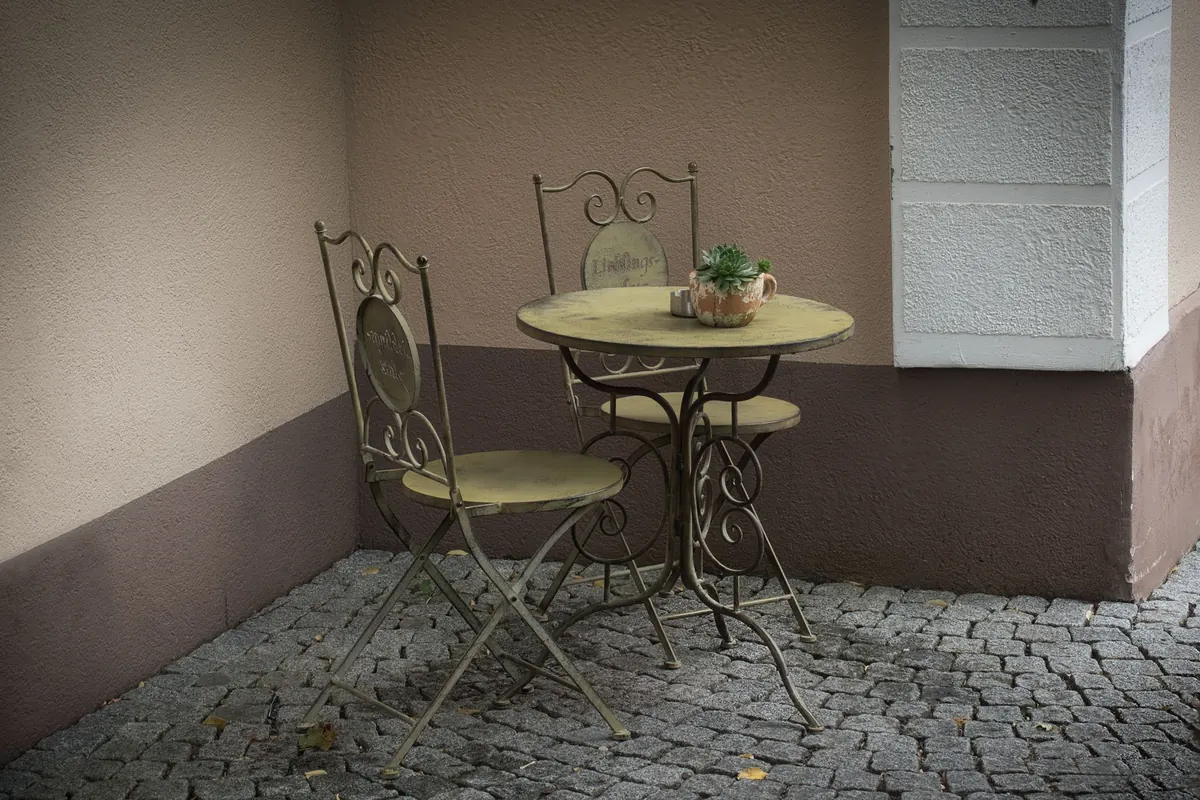
A courtyard of three metres by four is not a compromise. It simply asks you to choose differently. Furniture that suits a lawned garden will crowd a Victorian side return within a week, and anything too heavy to shift alone tends to stay exactly where it was first put. Work through the checks below before you buy anything, and the space will still feel like a room rather than a storage yard.
Start with a tape measure, not a catalogue. Note the usable paving area, then add the awkward details: a downpipe on the boundary wall, a manhole cover, a slope towards a gully, the outdoor tap, the swing of the back door. Each one removes a few centimetres you were counting on.
Allow roughly 70 to 80cm of clear width for anything you will walk along regularly, and around 45 to 50cm between a table edge and a wall if the chairs pull out sideways rather than backwards. Mark the proposed footprint with masking tape or chalk and sit in an existing chair inside it. Ten minutes of pretending to eat a meal there saves a return trip to the shop.
Then measure the route the furniture must travel. A side return with a 60cm gate rules out a wide bench, however slim it looks online. Steps, gravel and a tight corner at the top of the garden all matter as much as the patio itself.
Space-saving seating falls into three families, and most small courtyards are best served by a mix.
Two details make a real difference. Armless or low-arm chairs slide under a table, whereas chunky arms can add several centimetres on each side and force the table further into the yard. And think about weight: powder-coated aluminium can be moved with one hand, cast iron cannot.
A round table usually beats a rectangular one in a tight corner. There are no sharp corners to walk into, and the seating wraps around rather than spreading sideways. For four people in a courtyard, a 90cm round table is a sensible reference point to work from.
Drop-leaf and gate-leg designs stay compact against a wall and open out for a meal. Folding bistro tables do the same job at bar height, with stools that tuck underneath. Nesting side tables give you a drinks surface for one and, when guests arrive, a second that slides out from below. If you are short of floor space entirely, a wall-mounted fold-down table is worth considering, but it needs a solid masonry wall and suitable fixings. If you are unsure whether the wall will take the load, ask a builder before you drill.
The best small-garden purchases do two jobs without looking like they are trying. Look for:
Teak and roble age gracefully and can be left out, though they benefit from an annual clean and occasional oiling if you want to keep the original colour. Acacia is lighter and generally kinder to a budget; check the timber is responsibly sourced and expect to treat it more often. Untreated softwood left out through a wet winter will go grey and may split.
Powder-coated aluminium is the easiest choice for small spaces: light, rust-resistant and simple to stack. Woven resin over an aluminium frame copes well with rain, but cheaper weaves can crack in frost, so move it under cover in the coldest months if you can. Painted steel and wrought iron look handsome but chip, and a chipped edge is where rust begins.
Even showerproof cushions should come inside overnight in wet weather. Look for quick-drying foam and zip-off covers you can wash, and store them in a lidded box with a little airflow rather than a sealed plastic bag. Over winter, cover stacked furniture with a breathable cover rather than plastic sheeting, which traps condensation against the frame.
Push furniture to the edges and keep the centre clear. A courtyard reads as larger when you can see a continuous run of paving, even a narrow one. Two small zones often work better than one big set: a pair of chairs and a side table by the door for morning coffee, a bench and a low table at the far end for the evening.
Shade is the piece most people forget. A wall-bracket parasol or a cantilever design with a flat, low-profile base takes up far less room than a central pole and heavy base. Take parasols down in strong wind, and never leave one standing in a storm. Lighting, a small outdoor rug and a couple of wall-mounted lanterns add character without costing you a single square metre of floor.
Sit in the chair at the height you actually eat at, not just the height it looks best at. Ask how the furniture arrives: flat-packed sets can be heavy and fiddly, so check the weight of the largest box and whether you will need a second pair of hands. Confirm the delivery and returns terms with the retailer, particularly for bulky items, and check whether the frame and the finish are covered separately.
Finally, plan the winter routine now. Decide where stacked chairs, folded tables and cushions will live between October and March, and you will avoid the annual scramble that ends with a damp cushion behind the wheelie bin.
Photo: Joerg Hartmann / Pexels
Elevate your outdoor living space.
Copyright © 2026 Summit Yard. All rights reserved. Summit Yard.